Friday, May 18, 2012

What next?


After the heart-break of my dragoons, I need to find another project (I can't look at them now; they make me too sad. {Sobs!}).

I'll tackle the remainder of Jim's Soviets in the mean time, but what should I do for my own project?

These are the projects I have on the go, or planning to start:
  • More Italians, line and light infantry?
  • More Westphalians, line and light infantry, hussars and cuirrassiers?
  • Wurttemberger infantry and artillery?
  • More British & Portuguese infantry for my c1813 2nd Corps?
  • Zvezda French cuirassiers?
  • More Royal Marines and naval landing party?
  • Strelets Egyptian campaign British and French infantry?
  • Or, completely out of left field, Romans and Goths?
Suggestions welcome, but I reserve the right to change my mind from the resulting consensus! ;-)

I also need to get cracking on my medal mystery, too. Next stop to see if my in-laws over in the Old Dart can make their way to the IWM and National Archives!

All of this probably won't happen until I finish the last 2 papers for this semester, of course :(

Monday, May 14, 2012

Oh, The Humanity!


I'm afraid my dragoons will not be destined to brave the table-top, as they met with a terrible tragedy too awful to relate (nearly)!

My work bench has become too crowded with stuff for my dragoons to fit. I was going to put them in the metal tool-box that I carry my troops in, but as it was already full, and I didn't have time to make room, I left them on the floor next to the tool-box. In the middle of the night a person, who shall remain unnamed, stumbling around in the dark, trod on them all breaking, bending and snapping all the newly completed dragoons!

I'm not sure they are retrievable; I'll sort them into those that I think can be saved and those that can't, then make up some replacements. Most of the riders could probably be re-used, but the horses are all fairly well cactus.

:*(

Saturday, May 12, 2012

Completed - Procrastination Project #2: 1st (Royal) Dragoons

Here they are; all ready to deal with their French counterparts if they are so foolish to take them on!


Thursday, May 10, 2012

Procrastination Project #2 - 1st (Royal) Dragoons : Basing

No great progress in the wargaming front, except for the basing of my dragoons. After letting the artists' texture gel dry, the next step will be the painting,  flocking and addition of some ballast and clumps of foliage.

I'm planning to get to the club Friday week, after my latest assignment is finished (squeezing more blood from the stone!), so these bad boys should get their baptism of fire then!


Wednesday, May 9, 2012

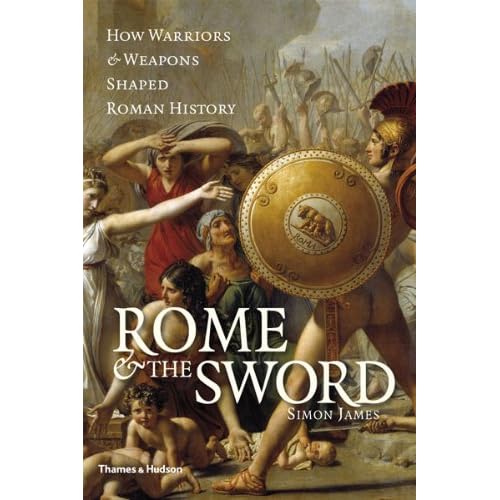
Book Review - Rome and the Sword

A break from the usual fare on this blog, I'm sure you'll agree! I became hooked on history when I was a youngling, my interest in history was sparked by tales of Troy and the Odyssey, followed by the deeds of Caesar (influenced not least because of a passion for Asterix!)

A couple of books by Peter Connolly on the Greek and Roman armies, and Rome's enemies (which still hold pride of place in my library) with his glorious full colour pictures fired my imagination as only a young boy's can be. I still have (somewhere) a couple of 15mm lead legionaries and auxiliaries (with now broken spears and pilums) courtesy of my family from our European holiday when I was 12. Maiden Castle, Housesteads at Hadrian's wall, Chedworth villa with its amazing mosaics, Bath; all were on the itinerary because of their links to the Roman period.

Reading this book was like being transported back in time in more ways than one! The author actually starts the book by saying that his interest in the period started with a simplistic childhood admiration for the fighting qualities of the Roman legionary, more or less exactly the same as me. He goes on to say that a real understanding of the period requires an appreciation of what the legionary fought for, as well as against. How the empire was made basically on the blade of the sword;  how it was maintained by the sword and how society was geared for the benefit of the soldiers is something that is not always appreciated by those who laud the Roman Empire as a civilising influence on a barbaric Iron Age Europe and the source of modern liberal democracy.

The author traces the developments of the Roman Empire from Rome's origins to the fall of the Western Empire using the sword designs used by the soldiers as a barometer, from Greek-style xiphos through to the Sassanid influenced proto-broadsword. The adoption of different styles of swords reflects Rome's ability to absorb foreign ideas and peoples, as well as methods of fighting. From early imitation of the Greek hoplite phalanx, to their more open maniple organisation; from the adoption of Celtic style shields, helmets and chain-mail, to the use of the famous gladius Hispaniensis; from the adoption of the lorica segmentata to the increasing use of 'barbarian' allies; all these indicate an extremely adaptable and ruthless civilisation. They were able and willing to use anything and anyone to remain the top of the heap, while always harking back to the 'glory days' of the Republic.

The author also makes clear the success of the Roman Empire; the dual nature of the sword and the open hand. If resistance is met, then the sword enforces Roman might, but on the flip-side, once defeated, the political elite of the defeated were offered the open hand, ie. 'Join us and receive all the benefits of the Empire'. That explains the success in Rome conquering the Mediterranean basin, but not the wilds of 'Barbaricum' east of the Rhine and north of the Danube; the Germanic tribes just weren't politically developed enough for the 'open hand' to get any purchase. The sword could be, and was,  employed successfully in this area (bar the unfortunate experience of Varus in AD 9), but without a political leadership to co-opt, the effort to subdue the tribes was not deemed worth the effort. The Gauls  who faced Caesar had just begun to form proto-states, ironically because of long contact with Rome, and were relatively 'easy pickings'. The interior of Spain, on the other hand, took generations to subdue because its lack of an overall political leadership. Parthia and its Sassanid replacement resisted the open hand approach and were too strong for the sword, resulting in a running hot/cold war until both the Middle Eastern territories of the Eastern Roman Empire and Sassanid Iran were overrun by the Moslem Arabs

What I found most interesting is the author's suggestion that the fall of the West was in part due to the eventual organisation of the Germanic tribes into precisely the organised societies that Rome previously would have annexed, mainly because of their interaction with Rome over an extended period. The pressure placed on the Western Empire was too great for Rome to deal with and ended with the 'Barbarians' replacing the Empire as the ones calling the shots. All the political and land-owning elite transferred their loyalties to the leadership of the newcomers who neatly suborned the existing structures to their own benefits. That is why France, Spain, Portugal and Italy all speak languages derived from Latin, while Britain always wore Roman-ness much more lightly and threw off any lingering loyalty to Rome, adopting the ways and language of the newcomers.

This kind of social history tracing changes through a culture (and here the author makes the distinction that the Roman soldier existed in a separate culture from the civilian Roman, especially after Marius' reforms), but using an object to illustrate the story always grabs my attention as it makes the story a lot more interesting to someone like myself without a great deal of knowledge of the period. I really enjoyed it and plan to read more on the topic, especially the later Roman period.

Sunday, May 6, 2012

Procrastination Project #2- - 1st (Royal) Dragoons

Horses all painted up, riders mounted and both shaded/varnished using the Aldi dark varnish. Next job, basing.

I've been reading about ancient Rome recently (review coming), and find that I've got a hankering to paint Romans and Goths. Probably more for my own indulgence than gaming, but you never know.

If I do go down that path should the blog be called Monsieur le Rosbif, Johnny Frog and Bigus Dickus?! Maybe I'll just make a separate page for Bigus Dickus and his wife Maxima.....Buttocks (pfffff..ahhahahahaha!!)


Friday, May 4, 2012

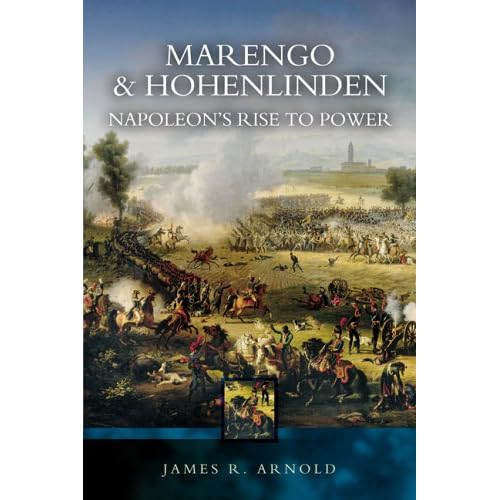
Book review - Marengo & Hohenlinden

Marengo & Hohenlinden by James Arnold is the latest book to get the Rosbif Review treatment.

I've read Arnold's book on the 1809 campaign and found it a good, readable account that doesn't get bogged down in the minutiae of people and units (as I found the Gill magnnum opus 'Thunder on the Danube' trilogy). I suppose it depends on what you want, though, as I know Gill's work was indispensable for working out the OBs for our huge Aspern-Essling and Wagram games.

In this case I was interested in Napoleon's first battle as leader of the nation on which his reputation depended. And as such it was heavily embellished in the retelling by the Napoleonic regime. I knew from my previous readings that he stole a march on the Austrians by crossing the Alps behind the Austrians while their attention was taken in besieging Massena in Genoa taken; was lucky in winning the battle and that he owed a great deal to the unfortunate Dessaix, who died at the critical moment, after marching to the sound of the guns, as well as to Kellerman, who's decisive cavalry charge wrecked the seemingly inexorable advance of the Austrian infantry. I didn't know anything about the details of the campaign and absolutely nothing about Moreau's coup de grace at Hohenlinden.

Arnold sets out the context for the batlles from Bonaparte's Brumaire coup and his need to cement his authority over a fractious nation with many ambitious would-be coup leaders through to the millitary situation he inherited after his return from Egypt. He also takes the Austrian point of view and details their plans for invading France via Northern Italy after mopping up French strongpoints like Genoa. Despite the French salient in Switzerland, the Austrians were confident of a victorious simultaneous march on Paris from Germany and Italy, sweeping aside the French armies that had proved unable to hold Bonaparte's gains in Italy and do more than hold to the left bank of the Rhine. Like a lot of Austrian plans to this point, their optimism far outweighed their ability to carry them out.

Of course we know that Bonaparte showed them again how flawed their plans were, and although the Austrians almost handed Boney's arse to him in a sling, it was the quality of the French soldiers and their commanders that saved him. He had assumed the Austrians were retreating, never thinking that they were going to turn at bay and attack. Napoleon never underestimated the Austrians again.

The rest of the battle was described pretty much as I knew it from other reading, but what was new for me was the description of the aftermath of Kellermnan's charge. Arnold asserts that only the first few units of Austrian grenadiers were affected by the charge and the subsequent infantry exploitation of the resulting confusion. It was the fact that panicking Austrian cavalry fled the oncoming French tide that spelled the doom for the Austrian advance; the routing cavalry barged through the oncoming Austrian infantry formations, totally disordering them and infecting them with their terror, causing a mass rout. The division to the north had to hurriedly conform to the retreat lest they be trapped outside the walls of Allesandria.

Hoehenlinden is an equally, if not more, important battle than Marengo, but as it was fought by Moreau and not Napoleon, it doesn't seem to have gathered the same aura around it. Moreau was airbrushed out of the Napoleonic story and a lot of his best generals met a sticky end at the hands of yellow fever in Santo Domingo, like Richepanse, whose flanking attack put paid to the Austrian plans at Hohenlinden. Despite Napoleon's avowed meritocratic regime, he didn't trust officers from the Army of the Rhine; Ney being the exception.

In the aftermath of this battle, the way to Vienna lay open and no substantial Austrian army stood in Moreau's way. This battle was the coup-de-grace for the War of the Second Coalition, from which stemmed the Peace of Luneville and Amiens. While Marengo settled Napoleon's grip on power, Hohenlinden crushed the Austrians' will to carry on the war and gave Napoleon the image of peacemaker.

One of our group, Darren, planned a game based on Marengo which was fought last weekend (which unfortunately I couldn't attend). By all accounts it was a hard fought battle which the Austrians didn't lose (mainly because time didn't allow a conclusion!). As this was a taster for a more detailed game in the offing, I  plan to be involved in the next one. I suppose reading this book gives me an advantage for playing either side, but I'll probably have forgotten it all by then!

I enjoyed this read. It was the perfect balance between enough information to set the scene and tell the story but without bogging the narrative down with excessive unit details and a cast of thousands.


Tuesday, May 1, 2012

Bounty From the Blogosphere!

"Damme! That bounder Kincaid's written a giant book!"
My winnings from Tamsin's birthday bonanza arrived today. Huzzah!

Expect to see a review in the not too distant future (studies willing!).

Thanks again, Tamsin!
Related Posts Plugin for WordPress, Blogger...

My Shelfari Bookshelf