Showing posts with label Book review. Show all posts

Friday, July 26, 2013

Book Review - The Bernie Gunther Series

The first books in the series

These books have nothing to do with wargaming or warfare in general  (and nothing at all to do with Napoleonic wargaming!), but as a series of murder mysteries firmly rooted in a historical setting, these books are second to none. The mysteries are your standard whodunnits, but the details of the period are what set these stories apart from your average crime novels.

The protagonist, Bernie Gunther, is your typical hard, cynical, wise-cracking cop/private eye with an eye for a dame in distress, but the setting of early/mid twentieth century Germany is what makes me come back for the next installment. Bernhard Gunther has seen and done it all; his early adult life was spent in the trenches of the Western Front in the First World War, his young wife died in the Spanish Flu epidemic in the early twenties after which he joined the Berlin police force. The stories span the period from the Weimar republic when Bernie has to investigate murders against the backdrop of political violence and the interference of well connected colleagues. After the Nazis take power in 1933, he resigns rather than be forced out as his anti-Nazi, socialist politics make him persona-non-grata. After a short stint as the house detective at the Adlon Hotel, he sets up as a PI. His private investigation business flourishes with the spate of disappearances of socially and politically undesirable people under the pre-war Nazi regime. Obviously this line of work is dangerous, but his skills as an investigator and his lack of political connection bring him to the attention of the Nazi head of police, Heydrich, who, after giving him an offer he can't refuse, uses him as his own tame detective, before ordering him back into the police. With the coming of the war Bernie is drafted into the SD, the SS police, and is shipped off to the Eastern Front where he witnesses all the horrors of that theatre of war. Taken prisoner by the Soviets after the war, he manages to escape and re-establish himself as a private eye in Berlin, before he is forced into exile in Argentina after he is set up for a murder he didn't commit. Forced out of Argentina when he learns too much, he ends up in Cuba where he finds himself entangled in the murky world of organised crime and anti-communist espionage, reluctantly ending up as an informer/enforcer for the mob in Havana. Whether or not Bernie manages to make it back to his beloved Berlin is not yet clear, but I'm hanging out to read the latest installment A Man Without Breath (I suppose he must, as the novels are narrated in the first person).

The stories aren't a chronological recounting of his career, but dip forwards and backwards through time as characters appear and re-appear, contrasting their pre-war roles with what they did during the war and how they have reconciled the two in the post-war era. There are a host of historical characters that appear, from the Weimar police hierarchy and (in)famous faces of the decadent Berlin scene of the roaring twenties, to political figures of the period. Incidents like the burning of the Reichstag and Kristalnacht make appearances almost as important as the historical characters themselves.

These stories make me want to find out more about the Weimar period and how a seemingly democratic and otherwise liberal society managed to end up under one of the worst totalitarian regimes Europe, and the world, has seen.

Highly recommended!

Tuesday, June 4, 2013

Napoleon's Viceroy - Book Review.


Seeing as I'll be commanding the IV Corps in the Borodino game next January, I thought I should know a bit more about the man whose shoes I'll be filling. The only biography in English I could find is an old one published in 1966 if my memory serves me.

Carola Oman, daughter of the great Charles Oman of Peninsular War History fame, was a historian of note herself, and penned several biographies of major personalities, including Moore and Nelson. Her biography of Napoleon's step-son borders on hagiographic, but still it seems that he was extraordinarily loyal when compared to his contemporaries in Bonaparte's inner circle.

That seems to be a theme throughout the book; his loyalty to his father, his mother, his step-father, his sister, his wife and her family, the royal house of Bavaria and, above all, to France. After all his motto was apparently "Honour and Fidelity", so that's no real surprise.

Both his parents were arrested early on in the Revolution, his father ending up with an appointment with the "National Razor", but during that time he took it on himself to protect his sister Hortense, and free his parents from imprisonment. After his father was executed he took on the role of head of the household. All this happened before the age of 12.

Once his mother became involved with the rising star of French politics that was Napoleon, Eugene seemed to latch on to Bonaparte as a surrogate father figure. From that moment onwards he rode the roller-coaster that was the Napoleonic regime, first as adopted son and heir-apparent, then as viceroy of the Kingdom of Italy and Corps commander in the Grand Armee.

The book doesn't really critique his military abilities, which I felt was a drawback, as I am looking to find out what sort of a commander he was, but tells the story of a quick learner in the 1809 campaign in northern Italy who learnt from his mistakes and from his step-father's written instructions to end up beating Archduke John twice, at the Piave and the Raab. The author also passes briefly over greatest battles, Borodino and Malojaroslavets without much analysis, and hardly makes anything of his retreat from Prussia to the line of the Elbe in early 1813 after being thrown the command of the remains of the Grande Armee after Murat chucked it in.

He seems really to have come into his own as a commander when the Austrians entered the fray and invaded northern Italy with the aid of the turncoat Murat. He beat them in every engagement even though he was well outnumbered. He also resisted Napoleon's command to the point of wilful disobedience. Napoleon ordered him to come to his aid in France, but Eugene insisted he'd be better off tying up the Austrians in Italy, rather than abandoning the kingdom and adding his paltry numbers to Napoleon's tiny command. He was probably right, too. Only Napoleon's abdication stopped the fighting in Italy; he had done his duty, keeping much greater numbers occupied which would otherwise have been able to reassert control in Italy and threaten France from the south. I have borrowed the Nafziger book on this last campaign and am looking forward to a more detailed critique of his military abilities.

His married life is the author's favourite focus, where she portrays him as a loving husband and doting father, cruelly and reluctantly separated from from the regularly by his duty.According to the author, he was one of the few members of Napoleon's inner circle whose arranged marriage (to a daughter of the King of Bavaria) was a success eventually turning into a love match. This paragon of matrimonial bliss is spoiled somewhat by mention in other people's accounts of his time at the Congress of Vienna including time spent with his 'mistress'! Otherwise, you'd be forgiven to think he was one of the few great Frenchman in history able to keep the contents of his pants only for his wife! Besides that little oblique mention of his infidelity, the author paints him in very Victorian terms as a blissfully happy family man who happened to have been the stepson of the most powerful man in Europe.

Probably a bit too 'fluffy' for what I was looking for and in certain passages the author's prose left it really difficult to work out exactly who she was referring to, it was nevertheless a good starting point to learn about the man himself. I want to find out more about him as a military leader, so I'm going to read these two books for more of an idea of his abilities a commander, at least in his Italian campaigns:

The defense of the Napoleonic kingdom of Northern Italy, 1813-1814 / George F. Nafziger and Marco Gioannini.

Napoleon's Italian campaigns : 1805-1815 / Frederick C. Schneid ; foreword by Gunther E. Rothenberg.

That's one of the perks of working in an academic library: all these resources on hand!

Friday, May 3, 2013

Book Review - Wellington's Wars


I'm back to reading Napoleonic non-fiction after reading a fair bit of fiction of late. This book is the latest to finish its turn on the top of the pile on my bedside table.

How many other biographies or battle histories can be written about the Napoleonic period in general before they all start repeating themselves? I must admit that this was part of the reason I turned to fiction again after such a long time. I felt that this was going to be a re-hash of the Iron Duke's military career without offering anything new to say, but was mildly surprised to find that the author actually did manage to hang the familiar old stories on to a hook that hasn't been covered in any in-depth way in all the other biographies I've read (or at least can remember reading!). This book particularly examines the experiences from his early military career in Flanders, India and the early period in the Peninsula which gave rise to his extraordinary success as a military leader, culminating with the Battle of Waterloo. Also pleasing is the fact that this book is by no means a hagiography of a superman, but an examination of why Wellington succeeded as a general despite some glaring flaws.

The main thesis the author pushes is that amongst all his well known military abilities, it was Wellington's political acumen that drove him to the pinnacle he reached in British history. Not just his diplomatic skills with dealing with recalcitrant allies, but also his political dealings with his own government and knowing that what could be done militarily may not always be politically expedient. The ability to balance the two competing demands as near-perfectly as he did is the author's main argument as to why Wellington deserves the title of military genius.

What surprised me was the author's contention that Wellington was weakest in his ability to analyse intelligence. His legendary ability to 'know what is on the other side of the hill' would seem to indicate that this was not a weakness, but the author points out several occasions throughout his career (the early stages of the Waterloo campaign being the last) where Wellington interpreted the available intelligence to suit his own preconceived ideas. The Battle of Assaye, for example and contrary to later retellings, was actually fought due to a failure of interpretation of evidence and reliance on racial stereotypes. Wellington's assumption was that the enemy was not going to make a stand because they were retreating to join up with another Maratha army nearby, despite the fact that intelligence indicated they were concentrating for battle. He also assumed that native infantry would run in the face of determined European attack, discounting the fact that the core of the Maratha infantry and artillery were European trained to a standard of discipline not that far removed from his own troops.

However, it was his ability to never stray from the political objectives and to preserve his army, despite pressure from his own government and that of his allies, that set him above the ordinary. For instance, his masterful preparation of the defence of Portugal behind the Lines of Torres Vedras was carried out in total secret against severe criticism from the opposition and even his own supporters in the government found it difficult to support him. Faced with criticism from his officers and politicians at home, he nevertheless forged ahead with his plan which brilliantly succeeded. Up until the Vittoria campaign, he never had 100% support at home, but never let that stop him doing everything to keep the British army in the field as a threat to the French and a support to the Spanish, while never exposing it needlessly to danger.

The ultimate expression of Wellington as political warrior lies in the aftermath of the Waterloo campaign. Despite the unalterable fact that Waterloo was a joint victory of the Anglo-Dutch and Prussian armies, and that the battle would not have been fought if the Prussians had not agreed to support him, Wellington made sure that history recorded the battle as a British victory in order that Prussia would not be able to translate the victory into excessive demands for reparation which potentially could set the stage for further conflict. The author contends that because Wellington so quickly claimed the victory for Britain and shut down any claim for sharing it with the Prussians, the Prussians could not justifiably lay claim to a larger slice of the spoils, which contributed to the ongoing peace after 1815!

I'm not sure how deliberate claiming the glory for Britain was, or whether it was natural jingoism that triumphed, but it makes a good story that Old Nosey preserved the peace by short changing the Prussians out of their fair share of the glory. Perfidious Albion personified! (Though I suppose that with his experience of Prussian thirst for revenge during his time as ambassador in Paris, his time as ambassdor to the Congress of Vienna and the vicious aftermath of Waterloo it's not such a long bow to draw after all)

Besides that last claim, I thought it was a good book that gave a new slant to the familiar tales. it didn't take those tales at face value and looks underlying causes due to the personality of the Great Man himself.

Monday, April 8, 2013

Wojsko Powstania Kościuszkowskiego - The Army of the Kosciuszko Uprising


Mrs Rosbif found this gem in the 'For Sale' trolley at her work for the princely sum of $0.50!

It's a really detailed record of the uniforms and personalities of the War of the Second Polish Partition, or the Polish-Russian War of 1792 using contemporary images of the people, soldiers and battles of the conflict. She bought it for me because she thought it looked 'Napoleonic'. Published in 1987, it must have been a product of the decline of communist censorship as the topic of Polish national resistance to Russian invaders would have been unthinkable even a few years earlier.

The text is in Polish, but it does have a multilingual translation of the plate information at the back of the book.

It creates food for thought for a wargamer; I could use Austrians, Saxons, Early French with head conversions, etc. to create some of the regular army units, but as the majority of the infantry were peasant levies armed with modified scythes, that would make an accurate representation of the insurrection forces more problematic!

It's a beautiful book with lots of colour illustrations and black and white etchings and sketches, but will most likely remain on the reference shelf of my collection, as I need a new period like a hole in the head at the moment!

Sunday, July 1, 2012

Book review - British Victory in Egypt, 1801

This book took a while to get thorough and then write the review for as all my Roman research got in the way. I've been using most of my reading time on the daily tram trip to and from work either listening to the History of Rome podcast or reading Adrian Goldsworthy's Fall of Rome (of which I gave up in the end as I was reading it at the same time as listening to the podcast and beginning to get the timelines of both book and podcast confused!). Now that I've finished the podcast, I returned to finish this book.

I always considered this campaign very much a minor footnote in the Napoleonic Wars; sort of a precursor to the main event of the Peninsula War. The French were abandoned by Napoleon, Kleber had been murdered by an Egyptian fanatic and Menou had lost the respect of the French by turning native and converting to Islam. All that was left was for the British to kick the door in and the whole French edifice would collapse. Where was the glory in that?

This book sets the scene for the campaign, including the diplomatic, strategic and military importance that the campaign had for Britain at the time.

After Marengo the Second Coalition had collapsed, leaving Britain alone to face France. The mood was for peace, but before peace needed to be negotiated from a position of strength. The French occupation of Egypt was a dagger held poised at the throat of Britain's major imperial possession, India. If France held it when peace talks were held, Britain would be at France's mercy. If Britain could dislodge the French, their position in India would be secure and their bargaining power would be that much greater.

Also, it was the perfect opportunity to prove to the world that Britain's army was not the incompetent force that had lost America and had been so ineffectual during the first decade of the war. The most recent failure was the combined Anglo-Russian attack on Holland that had resulted in ignominious failure. Sir Henry Dundas, the minister for war and the author of a comprehensive manual of maneuvers, and his relative by marriage, Sir Ralph Abercromby, wanted to prove that a properly led, organised and provisioned army could succeed where all other armies had failed. Previous campaigns had had muddled strategic aims, were poorly led and supplied and more often than not ended in dismal failure. Abercromby was a veteran of the American Revolutionary War and also of the early years of the French Revolutionary War. He was an enthusiastic early adopter of Dundas' manual of arms and ensured that the officers and men under his command were thoroughly versed in it. He made sure that his officers and those of the Royal Navy were well practised in the skills of landing an army on a hostile shore and also managed to get as much provisions as possible from the ramshackle Turkish empire before he even attempted the landing.

While criticised as a tactician, and especially for exposing himself needlessly to danger, Abercromby was a brilliant organiser and planner and always made sure that everything that could be done to feed and supply his men was done. Everything that could give his men the edge over the enemy as well as to prevent needless exposure to danger he ensured was done. All this made him a favourite of the rank and file.

While the campaign was all but over after the first few battles around Alexandria after landing (which cost Abercromby his life), the campaign still could have ended in disaster if the French had been more ably led. As the upper ranks were riven by factionalism and lower ranks morale was at rock bottom, the French were never able to mount the decisive counter attack to the danger that Abercromby's landing represented. However, Dundas' manual of arms, British training and discpline and the support of the Royal Navy all ensured that the French efforts to resist were beaten.

As a definite morale boost and vindication of the fighting qualities of the British Army, the campaign was exactly what the army needed. Even though most of the senior officers never served on active duty again, the middle level of officers all came into their own in the Peninsula, including Moore, Hill, Beresford, Spencer and so on. Moore became convinced in the worth of light troops after seeing the advantage in facing the French with trained light infantry such as the Corsican Rangers and the 90th Foot, which had been extensively trained in the art of skirmishing.

The author makes clear that this campaign was an extremely important one in the annals of the British Army as well as setting the scene for a diplomatic coup in the upcoming peace negotiations with Napoleonic France. Rather than being a campaign in a backwater, it was a hugely important one for the future of British resistance to French hegemony.

 I found this book an illuminating and enjoyable read. (Now to paint up the British foot in toppers and collect the rest of Strelets' Egyptian campaign figures....)

Friday, June 22, 2012

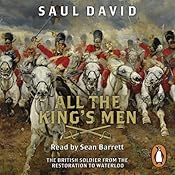
(Audio) Book Review - All the King's Men

After listening to various podcasts (especially the American ones) I succumbed to the sponsor's  message and got my free download after subscribing to Audible.com.

I settled on 'All the King's Men' by Saul David, whose work on the Victorian era I'd read previously and thoroughly enjoyed. I don't know if it was the format, the narrator or the content, but I was left a little underwhelmed by the experience. It may be that if I'd read it myself I would have enjoyed it more, but I'm not convinced. Part of the problem is that the book bills itself as "The British soldier from the Restoration to Waterloo", but it is more a narrative of the so-called Long 18th Century, rather than a sociological examination of the redcoat during this period.

As a narrative history of the wars, campaigns, battles and personalities of the period there's nothing wrong with it and actually makes a fairly good tale, but the misleading subtitle left me feeling slightly cheated. That is more than likely not the author's fault, but detracted from what would have been an otherwise enjoyable experience.

As to the narrator, Sean Barrett (I'm sure I've heard him narrating a Sharpe novel in audio-book form), his stentorian delivery sounds more applicable to the stage rather than reading a non-fiction book. When he was reading first person recollections of events his acting skills and accents were suitable, but I found the rest of his delivery a bit artificial. Maybe  I've been spoiled by listening to too many podcasts where the presenters are enthusiastic amateurs who come across as friends chatting animatedly to you about their favourite topic. I found the experience less than what I'd hoped for. Maybe it's a format that lends itself more to fiction?


Anyway, the book itself covers the history of the British army from the time of the Restoration all the way through to the fall of Napoleon. During this time the army was led with varying degrees of success by leaders including the best two generals Britain and possibly the world has ever known; Marlborough and Wellington. Besides the unfortunate events of the American Revolution, the British army didn't suffer any major defeat during this period. The author compares the tension between the maritime vs. continental strategies that dominated the period and (not surprisingly) concludes that the maritime supremacy that Britain gained during this period resulting in the great 19th century empire was the result of all the hard-won victories gained by the army, not the other way around. Because Britain fought mainly the French, they could attack them in their colonies, but also as part of a continental coalition, thus being able to exact better terms once the post-war spoils were divided compared to what they would have gained if they had concentrated solely on colonial and naval warfare.


In all, it's a fairly standard narrative military history of the period, understandably focussed on the big events and the stand-out personalities of the period. 


I might try and find a hard-copy version of it at some stage in the future and re-read it to see if I enjoy it any more than I did listening to it.

Monday, June 11, 2012

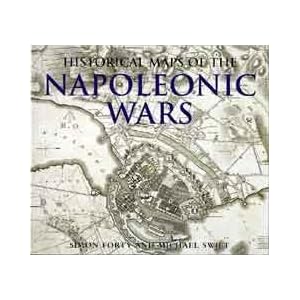
Book Review - Historical Maps of the Napoleonic Wars

Junior Rosbif #1 has had a 5 day weekend as state schools in Victoria went out on strike last Thursday against the state government's miserly attitude to teachers' pay, as well as over the ideological gap between the union and the government  over the government's policy regarding paying teachers according to their results. Anyway, JR#1 had the day off followed by a curriculum day on Friday, with the added bonus that today is the official Queen's Birthday holiday! She and Mrs. R. had a Mummy/Daughter bonding day on Friday where they hit the shops to buy some things that were needed (clothes, shoes), as well as some things that weren't (books). 

At one of their stops they found this cracker in the bargain bin for $A10!

It's a book of full colour plates of contemporary (or near-contemporary) maps of battles, campaigns, fortifications and  geographical areas, with most of the material sourced from the archives of the Public Records Office, Kew. It covers everything from the plans of the Bastille to the Battle of Waterloo with everything in between, including the Peninsular Wars, naval battles, the 1813 campaign to mention a few.

This will surely be handy for the planning of any future big January historical battle bash!

An example of the maps as requested by FireMonkeyBoy!

Wednesday, May 9, 2012

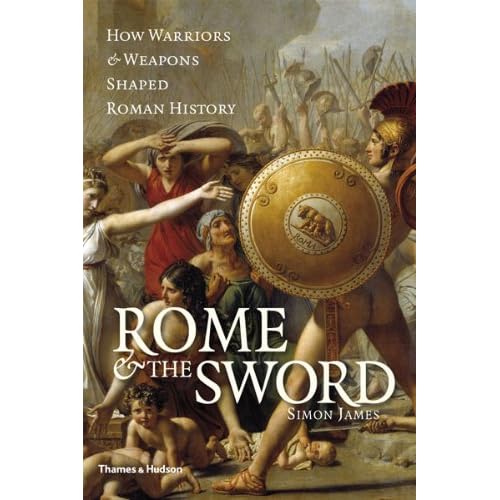
Book Review - Rome and the Sword

A break from the usual fare on this blog, I'm sure you'll agree! I became hooked on history when I was a youngling, my interest in history was sparked by tales of Troy and the Odyssey, followed by the deeds of Caesar (influenced not least because of a passion for Asterix!)

A couple of books by Peter Connolly on the Greek and Roman armies, and Rome's enemies (which still hold pride of place in my library) with his glorious full colour pictures fired my imagination as only a young boy's can be. I still have (somewhere) a couple of 15mm lead legionaries and auxiliaries (with now broken spears and pilums) courtesy of my family from our European holiday when I was 12. Maiden Castle, Housesteads at Hadrian's wall, Chedworth villa with its amazing mosaics, Bath; all were on the itinerary because of their links to the Roman period.

Reading this book was like being transported back in time in more ways than one! The author actually starts the book by saying that his interest in the period started with a simplistic childhood admiration for the fighting qualities of the Roman legionary, more or less exactly the same as me. He goes on to say that a real understanding of the period requires an appreciation of what the legionary fought for, as well as against. How the empire was made basically on the blade of the sword;  how it was maintained by the sword and how society was geared for the benefit of the soldiers is something that is not always appreciated by those who laud the Roman Empire as a civilising influence on a barbaric Iron Age Europe and the source of modern liberal democracy.

The author traces the developments of the Roman Empire from Rome's origins to the fall of the Western Empire using the sword designs used by the soldiers as a barometer, from Greek-style xiphos through to the Sassanid influenced proto-broadsword. The adoption of different styles of swords reflects Rome's ability to absorb foreign ideas and peoples, as well as methods of fighting. From early imitation of the Greek hoplite phalanx, to their more open maniple organisation; from the adoption of Celtic style shields, helmets and chain-mail, to the use of the famous gladius Hispaniensis; from the adoption of the lorica segmentata to the increasing use of 'barbarian' allies; all these indicate an extremely adaptable and ruthless civilisation. They were able and willing to use anything and anyone to remain the top of the heap, while always harking back to the 'glory days' of the Republic.

The author also makes clear the success of the Roman Empire; the dual nature of the sword and the open hand. If resistance is met, then the sword enforces Roman might, but on the flip-side, once defeated, the political elite of the defeated were offered the open hand, ie. 'Join us and receive all the benefits of the Empire'. That explains the success in Rome conquering the Mediterranean basin, but not the wilds of 'Barbaricum' east of the Rhine and north of the Danube; the Germanic tribes just weren't politically developed enough for the 'open hand' to get any purchase. The sword could be, and was,  employed successfully in this area (bar the unfortunate experience of Varus in AD 9), but without a political leadership to co-opt, the effort to subdue the tribes was not deemed worth the effort. The Gauls  who faced Caesar had just begun to form proto-states, ironically because of long contact with Rome, and were relatively 'easy pickings'. The interior of Spain, on the other hand, took generations to subdue because its lack of an overall political leadership. Parthia and its Sassanid replacement resisted the open hand approach and were too strong for the sword, resulting in a running hot/cold war until both the Middle Eastern territories of the Eastern Roman Empire and Sassanid Iran were overrun by the Moslem Arabs

What I found most interesting is the author's suggestion that the fall of the West was in part due to the eventual organisation of the Germanic tribes into precisely the organised societies that Rome previously would have annexed, mainly because of their interaction with Rome over an extended period. The pressure placed on the Western Empire was too great for Rome to deal with and ended with the 'Barbarians' replacing the Empire as the ones calling the shots. All the political and land-owning elite transferred their loyalties to the leadership of the newcomers who neatly suborned the existing structures to their own benefits. That is why France, Spain, Portugal and Italy all speak languages derived from Latin, while Britain always wore Roman-ness much more lightly and threw off any lingering loyalty to Rome, adopting the ways and language of the newcomers.

This kind of social history tracing changes through a culture (and here the author makes the distinction that the Roman soldier existed in a separate culture from the civilian Roman, especially after Marius' reforms), but using an object to illustrate the story always grabs my attention as it makes the story a lot more interesting to someone like myself without a great deal of knowledge of the period. I really enjoyed it and plan to read more on the topic, especially the later Roman period.

Friday, May 4, 2012

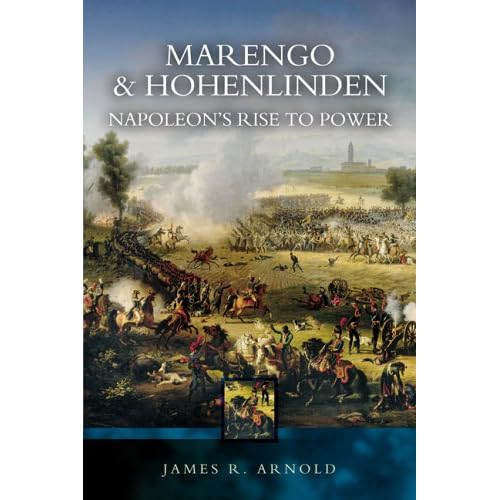
Book review - Marengo & Hohenlinden

Marengo & Hohenlinden by James Arnold is the latest book to get the Rosbif Review treatment.

I've read Arnold's book on the 1809 campaign and found it a good, readable account that doesn't get bogged down in the minutiae of people and units (as I found the Gill magnnum opus 'Thunder on the Danube' trilogy). I suppose it depends on what you want, though, as I know Gill's work was indispensable for working out the OBs for our huge Aspern-Essling and Wagram games.

In this case I was interested in Napoleon's first battle as leader of the nation on which his reputation depended. And as such it was heavily embellished in the retelling by the Napoleonic regime. I knew from my previous readings that he stole a march on the Austrians by crossing the Alps behind the Austrians while their attention was taken in besieging Massena in Genoa taken; was lucky in winning the battle and that he owed a great deal to the unfortunate Dessaix, who died at the critical moment, after marching to the sound of the guns, as well as to Kellerman, who's decisive cavalry charge wrecked the seemingly inexorable advance of the Austrian infantry. I didn't know anything about the details of the campaign and absolutely nothing about Moreau's coup de grace at Hohenlinden.

Arnold sets out the context for the batlles from Bonaparte's Brumaire coup and his need to cement his authority over a fractious nation with many ambitious would-be coup leaders through to the millitary situation he inherited after his return from Egypt. He also takes the Austrian point of view and details their plans for invading France via Northern Italy after mopping up French strongpoints like Genoa. Despite the French salient in Switzerland, the Austrians were confident of a victorious simultaneous march on Paris from Germany and Italy, sweeping aside the French armies that had proved unable to hold Bonaparte's gains in Italy and do more than hold to the left bank of the Rhine. Like a lot of Austrian plans to this point, their optimism far outweighed their ability to carry them out.

Of course we know that Bonaparte showed them again how flawed their plans were, and although the Austrians almost handed Boney's arse to him in a sling, it was the quality of the French soldiers and their commanders that saved him. He had assumed the Austrians were retreating, never thinking that they were going to turn at bay and attack. Napoleon never underestimated the Austrians again.

The rest of the battle was described pretty much as I knew it from other reading, but what was new for me was the description of the aftermath of Kellermnan's charge. Arnold asserts that only the first few units of Austrian grenadiers were affected by the charge and the subsequent infantry exploitation of the resulting confusion. It was the fact that panicking Austrian cavalry fled the oncoming French tide that spelled the doom for the Austrian advance; the routing cavalry barged through the oncoming Austrian infantry formations, totally disordering them and infecting them with their terror, causing a mass rout. The division to the north had to hurriedly conform to the retreat lest they be trapped outside the walls of Allesandria.

Hoehenlinden is an equally, if not more, important battle than Marengo, but as it was fought by Moreau and not Napoleon, it doesn't seem to have gathered the same aura around it. Moreau was airbrushed out of the Napoleonic story and a lot of his best generals met a sticky end at the hands of yellow fever in Santo Domingo, like Richepanse, whose flanking attack put paid to the Austrian plans at Hohenlinden. Despite Napoleon's avowed meritocratic regime, he didn't trust officers from the Army of the Rhine; Ney being the exception.

In the aftermath of this battle, the way to Vienna lay open and no substantial Austrian army stood in Moreau's way. This battle was the coup-de-grace for the War of the Second Coalition, from which stemmed the Peace of Luneville and Amiens. While Marengo settled Napoleon's grip on power, Hohenlinden crushed the Austrians' will to carry on the war and gave Napoleon the image of peacemaker.

One of our group, Darren, planned a game based on Marengo which was fought last weekend (which unfortunately I couldn't attend). By all accounts it was a hard fought battle which the Austrians didn't lose (mainly because time didn't allow a conclusion!). As this was a taster for a more detailed game in the offing, I  plan to be involved in the next one. I suppose reading this book gives me an advantage for playing either side, but I'll probably have forgotten it all by then!

I enjoyed this read. It was the perfect balance between enough information to set the scene and tell the story but without bogging the narrative down with excessive unit details and a cast of thousands.


Monday, March 19, 2012

Book review - Achtung Schweinehund!

This book is a rolled-gold, authentic, laugh-out-loud cack-fest that should be required reading for all historical wargamers. While I only took up this hobby 6 years ago, my childhood was so filled with toy soldiers and dreams of heroism and glory that the author's reminiscences struck a clear note of recognition in me. His descriptions of role-playing-games and their players had me laughing till I shed tears, and his descriptions of wargames conventions and the people who attend them was uncomfortably close to the truth! 

The author shows how a little boy's obsession with war, fostered by the previous generation's personal experience (in a peculiarly Anglo-Saxon way), gradually morphed into an obsession with historical wargaming and its associated paraphenalia. It's a path that a lot of us in the English speaking world, of a certain generation (ie, baby-boomers to early gen. X) can relate to; certainly I know I could. I grew up with tales of my grandparents' WWII service, collected Matchbox soldiers, read Commando comics, lusted after my friends' GI Joe figures and ran around with my mates shooting each other with imaginary guns or chucking dirt clods (or 'yonnies' as we called them) at each other pretending they were grenades. 

Incidentally, GI Joe finally revealed to me that Father Christmas did not exist, as at the age of 8, my family and I lived in the 3rd world where my father worked on an agricultural aid project. I was wavering in my belief of the existence of Santa before then, but gave him the benefit of the doubt. I thought if he really existed, then I would awake to find the aforementioned lusted after GI Joe action figure (NOT a doll!) would be in my stocking despite the non-availability of such a toy in the country we were living, during these pre-online shopping times. Needless to say, I didn't get my action figure, ergo Father Christmas was a sham!
From then on it was reading all the accounts of WWII action I could get my hands on and watching every movie on the subject that came along. I painted many a 1/72 WWII plane, my favourites being the massive Airfix Lancaster, although the Matchbox Stuka and Mosquito came a close second. After that came fantasy role-playing-games and my introduction to painting figures. We used Games Workshop and other figures to keep track of combat, and using my model aircraft painting skills, I can safely say mine were the prettiest figures (not boasting or anything!).

After that it was drinking and girls (but mainly drinking!), until settling down with Mrs. R and having a family spurred me on to picking up the hobby I'd always been fascinated by, but never had the courage to follow up. Initially there was the geek factor to overcome, but now that I'm a father, I'm so uncool (especially in my kids' eyes) that I am now immune to embarrasment. I came along to the NWA about 6 years ago and have been hooked ever since.

Besides geographical and generational differences, you can see that I had a similar obsessive start to my interest in all things war, although Asterix led me to an abiding interest in the ancient world, too. I would advise anyone involved in historical wargaming over the age of 40 to read this book and laugh and cringe in recognition at the stages of obsession that stay with you from childhood

Thanks to John R. who lent it to me (and to nearly everyone else in the club!).

Thursday, March 8, 2012

Book Review - Conquer or Die!

'Conquer or Die!' is the latest book to get the Rosbif review. As the Boys' Own-style title implies, it's a rip-roaring tale of adventure, danger, betrayal, and triumph in an exotic location. Best of all, it's all true!

This book details the British involvement in the latter part of the revolutionary wars against Spanish rule by forces led by the South American patriot Simon Bolivar. Even though Britain ended the Napoleonic Wars as one of the most powerful nations in the world, that didn't prevent the economy sinking into recession. Many former soldiers found themselves living in poverty, either under- or unemployed. Even junior officers relegated to half-pay, without family wealth to fall back on,  found that it was impossible to make ends meet.

Into this atmosphere, the officially unrecognised representative of Bolivar's 3rd Republic set about recruiting British citizens to serve in the revolutionary armies. Initially aimed at recruiting officers and NCOs to give much needed command experience to the newly raised regiments, the response was overwhelming. Two infantry and one of cavalry were raised even though officially British citizens were not permitted to enlist in foreign armies, especially ones rebelling against a 'legitimate' government. The British government turned a blind eye despite the Prince Regent's vehement opposition to the practice.

Those who raised the regiments on behalf of Bolivar's representative tended to be charlatans and amateurs who spun a good story and filled a hussar's uniform well. This was to be to the detriment of those they led to the tropical war zone. In several waves of enlistment under different leaders, the men were often promised things that could not be delivered. Not surprisingly, a lot of the 'gentlemen' hopped straight back on the next boat back to Europe, while the enlisted men had no such luxury and died by the score from tropical disease and neglect before they even reached a battlefield. Those who survived, however, contributed in a large way to the eventual victory over the Spanish.

Initially, the officers and NCOs commanded new regiments like the Black Rifles, filled with Indians forcibly recruited from missionary stations, but eventually enough volunteers arrived to man completely British units like the Albion Legion and the British Legion. Due to attrition, they were eventually reinforced with Spanish speaking recruits (who took pride learning to swear in English, so as to mark themselves as elite and separate from the average soldier!).

The tenacity these mercenaries displayed for a cause that was not theirs is astounding, especially as the survival rate was less than 30% of the original total due to disease, jungle beasties as well as combat. The author is unabashed at telling the story of Bolivar's war from the British point of view as he is writing for an Anglophone readership who are probably more familiar with the story of the British involvement in the Napoleonic Wars rather than the separate, but related, wars of independence of Latin America. Far from detracting from the story, I found that it put a period that I've struggled to read about in the past into context. It's a launching pad for me now to read a more general history of the theatre.

An added bonus for wargamers is that most of the battles of this period were small, division sized battles, perfect for our weekend club games. This Friday I've organised a game based on the Battle of Bocaya, 1819, although set firmly in Europe during the Napoleonic Wars.

Thursday, February 2, 2012

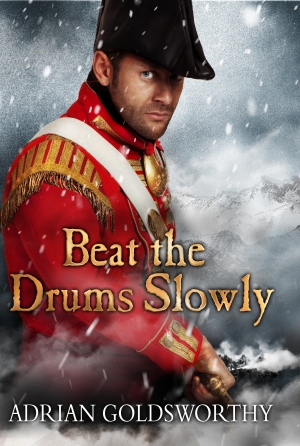
Book review - 13 Years Later & Beat the Drums Slowly.

I read fiction over the holidays; a lot easier to dip in and out of while you're traveling or relaxing on the beach.

The first book is the sequel to Twelve by Jasper Kent, while the second is the sequel to True Soldier Gentlemen by Adrian Goldsworthy.

So, to review 13 Years Later first; This story happens in Russia in 1825, appropriately 13 years after the events of the first story. The main character is still Alexei Danilov, who now is employed by the Emperor in keeping a watchful eye on threats to throne. As the story coincides with the Decembrist uprising, Alexei has his hands full infiltrating the group while trying to isolate his now grown son from their influence. Into this political powder keg comes the appearance of a vampire using communication codes that Alexei and his long dead comrades had devised to leave messages for each other. How had this vampire obtained the code and why is trying to contact Alexei? Is he a threat, or is he a warning of someone, or something, far more dangerous? And how is the Romanov dynasty involved? Is the threat facing them even more immediate than the Decembrists?

Old characters and new take part in the story that tells of the last days of the reign of Alexander II. It explains why some people believe the conspiracy theory that Alexander didn't die and instead secretly renounced the throne to spend his last days as a wandering ascetic monk.

A perfect pot-boiler for reading at the beach (I'm now reading the 3rd in the quintet, this one set during the Crimean War).

The second book I read was Beat the Drums Slowly, the sequel to True Soldier Gentlemen. Whereas the first book spent a lot of the narrative establishing characters and setting the scene for the fictional 106th Regiment of Foot to prepare itself to be shipped off to the Iberian Peninsula, this book is strengthened by the fact that all the characters are established and no more development or back-story is required; This is a purely plot-driven story and is much the better for it.

The regiment finds itself in Moore's army on its heartbreaking retreat through the snows of Galicia in 1808. They are part of the Reserve Division that keeps the French at bay while the rest of the army disintegrates on its retreat to the sea. One of the main characters, Hamish Williams, now promoted to Ensign, after a starting his career as a gentleman volunteer in the previous book, is separated from the regiment and his friends in the grenadier company when he goes off in search of the Major's daughter, the love of his life. He eventually finds her and together they try to rejoin the main army, picking up stragglers along the way, including a new-born baby! The ragtag group of stragglers, injured and wounded link up with an artillery detachment and realise that they are all that stands between the main army being outflanked by a detached group of French cavalry and light infantry who have been specially tasked by Boney himself to cut the British off from the sea.

Can this little group of misfits hold off the cream of the French army and save the retreating British? Will Williams' passion be requited? Will the rest of the 106th foot make it back the the ships?

I enjoyed it hugely and am eagerly waiting for the rest of the series.

Wednesday, December 7, 2011

Book Review - True Soldier Gentlemen

A bit of fiction on the Rosbif bedside table. That's a first! (Actually, the last book I read was also fiction - the latest by Russian author, Boris Akunin, but as it doesn't fall within the purview of this blog, I didn't review it. Highly recommended, though!)

Adrian Goldsworthy is better known for his non-fiction histories of the Roman Empire. This is his first venture into fiction and I found I enjoyed it a lot, despite some minor reservations.

Historical fiction set in the armies of the Napoleonic period has left me cold after trying to read the Sharpe series (can any character be so 2 dimensionally heroic, while all other British officers are incompetent fops and Frenchmen impossibly evil?). I enjoyed Allan Mallinson's Hervey books, but they mainly took place in the period immediately after the Napoleonic Wars. Then of course, there are all the naval novels like Hornblower and the Aubrey/Maturin series and all their imitators, which I've enjoyed immensely. But the army-based novels of the period that I have enjoyed have been few.

The book is written in 2 parts; the first concentrates on the officers of the fictional 106th (Glamorganshire) Regiment of Foot in their preparation for war during the period immediately before the expedition to the Iberian Peninsula, while the second takes place in Portugal where the characters find out what they're made of as they enter battle for the first time.

A lot of the book is spent establishing characters and the world they live in, with a lot of descriptions of training and barracks life. There is a brief interlude of Austen-ish manners and feminine charm with the introduction of the Captain's wife and daughter, and the establishment of rivalries and enmities that drive the narrative and look like continuing in further volumes of the series.

The battle scenes are described with brutal honesty, with the descriptions of waiting for a French artillery volley particularly gripping. The way the author describes the battles runs the gamut from the macro- to the micro-view; from the generals on both sides down to the British subaltern characters. I'm not sure if this works very well, as I'm never very happy when real life personalities are given the fictional treatment, but that's my personal taste.

The weakest part of the story, in my view, was the minor plot line of a vicious Russian (yes, Russian!)officer, who was out to regain his fortune that he'd gambled away in St. Petersburg, by snatching a treasure hoard that he'd found out about from the Portuguese whore with the heart of gold whom the British subalterns had sworn to protect and to reclaim the treasure for. The Russian was supposedly the Tsar's liaison between the French army and the Russian fleet, but did precious little except twirl his moustache and torture Portuguese. That he got his come-uppance so quickly left me thinking that surely there could have been a better plot device than him.

The strength of the book is the description of the world of the British Army subaltern and the battles they fought in, rather than characterisation. Hopefully the following volumes of the series will have more character development with the surviving characters becoming more rounded and believable figures and the plot a little more credible. Possibly the sheer number of characters in this book led to the dilution of characterisation. The next installment is called Beat the Drums Slowly and is set during the Retreat to Corunna. The main characters seem to be the newly minted Ensign Williams, who has risen from being a gentleman volunteer to subaltern in the aftermath of the Battles of Rolica and Vimiero, and his love interest, the Major's (previously Captain's) daughter, Jane McAndrews.

I'll be coming back for the next installment, so stay tuned for the review. Hopefully it'll be in Rosbif's Christmas stocking this year!

Tuesday, November 29, 2011

Book review - Wellington's Right Hand


I was looking forward to reading this book ever since I read the reviews for it. They were obviously written by reviewers with little knowledge of the military history of the period. I was disappointed by the book, expecting it to be a lot more interesting than I found it. Certainly, I learned things about General Rowland Hill that I didn't know like his post-Napoleonic career, but generally the book was a let down.

The author is a descendant of the general, so I could accept the family history tone to the book, even if it did grate after a while (she refers to the Hill and his family by their first names as if she knew them personally, and writes in the present tense when relating the contents of correspondence between the family members, even though the rest of the book is written in the past tense).

However, as the object of the biography was a soldier who made his life the army, she displays a limited understanding of military matters and skips lightly over his most important achievements in battle. This really dulled my interest and even made reading the book a chore, when I was really looking forward to learning more about one the most able British generals ever to have served, outshone only by Wellington himself.

I found several mistakes or misunderstandings of military technology and tactics, such as claiming that the new shrapnel shells burst over their target showering it with metal fragments; While not totally inaccurate, it misses the main distinction between common shell and the new shrapnel shell (or spherical case shot to give it's formal name) which was that the new type of shell was packed with musket balls, ensuring that its destructive power was so much greater than common shell. To the lay reader this doesn't really matter one way or another, but it niggled.

The author also dropped a couple of clangers that totally rewrote history. The main misrepresentation was the confusion between the Infante Carlos and General Don Carlos d'Espana (translate from the Spanish using Google Translate) claiming that it was the king's brother who commanded the division in the field. The first shared his brother, King Ferdinand's, imprisonment by Napoleon in Valencay throughout the period of the Peninsular War, while the second was an emigre Frenchman who commanded a Spanish division and fought in battles such as Albuera and Salamanca. When obvious mistakes are made like this, I wonder about the rest of the facts in this book that I'm not familiar with. Is the author just as cavalier with history in other areas I know little about?

Not recommended for those who want to the details on the soldier, rather than the person.

Friday, October 28, 2011

Book review - Wellington's Two Front War

The latest book to come off the Rosbif bedside table is Wellington's Two-Front War by Joshua Moon. It covers similar ground to Rory Muir's Britian and the Defeat of Napoleon, 1807-1815 (reviewed earlier in this blog). While I think Muir's book is the better of the two and tells the story from the home front, Moon's book is told mostly from the Peninsula. While he doesn't take Wellington's side completely, the limitations the government were labouring under aren't delved into in nearly as in-depth a way as they are in Muir's book. 

What is more clearly investigated in this book is the relationship between Wellington and the Royal Navy. While Wellington's personal relationships with Admirals Cotton, Berkeley and Popham were constructive, that was because they bent their orders from the Admiralty to the extreme. The Royal Navy were overstretched in protecting the sea lanes from American frigates and blockading French ports. The Biscay area was beset with French and American privateers preying on Wellington's supply convoys which were now being routed to Santander after northern Spain had been evacuated by the French after the battle of Vitoria in 1813. As the Channel fleet was also responsible for the northern and western coasts of Spain, they just did not have enough ships to be able to carry out their own tasks of blockading the main French ports as well as privateer-hunting and convoy escort duty, much to Wellington's fury. He felt that his army was the main game in the war against France and that the Admiralty should be bending over backwards to help him, not spread themselves thin trying to cover all their priorites.

This book also clearly illustrates the labyrinthine channels Wellington had to go through to get anything done with supply, ammunition and the appointment of senior officers all areas that were dealt with by separate departments; all outside his chain of command. How he had the time to actually fight the French is remarkable! He couldn't even choose his officers, being lumped with all kinds of incompetent, useless (and in one case mad!) time servers who hadn't had any experience in the field and owed their higher rank to buying their way to lieutenant colonel after which rank, they were guaranteed to reach the rank of general (obvious exceptions being Hill, Graham and Picton to name some of his better generals). It was the prerogative of the Horse Guards to appoint, as well as remove, officers, so Wellington was lumped with a lot of jobsworthies whose main claim was their patronage of those who made the decisions!

An illuminating book, interesting to read after the previous one illustrating the lot of the common soldier. It seems that the average private was lucky to get any army-issued food at all! On the political side of the story, Muir's book, however, is the superior in my opinion.

Thursday, October 13, 2011

Book Review - All for the King's Shilling

I finished this book this week so I want to write this while it's still fresh in my head. In some ways a brilliant book, but in others I think the author has yet to prove his case. It's a social history of Wellington's army from the Peninsula to Waterloo in which the author sets out to disprove the accepted stereotype of the British soldier as 'the scum of the earth'.

The author has done a great job of original research, compiling what he calls the British Soldier Compendium, a database of statistics gleaned from the existing regimental records still kept in the Public Records Office in Kew. As he found out, no one regiment kept the same records in the same format, or, indeed, kept them regularly and accurately up to date! From the most complete and accurate records he managed to create his database.

He goes a long way to disprove that the average British soldier of the period was sourced from the gutter and jails, by painting a picture of the economic and demographic situation faced by Britain at the same time it was engaged in the long struggle with France. By the later period of the 18th century, agricultural improvements and the ending of the mini ice-age led to a demographic explosion which the economy could not easily absorb. At the same time that the mutual economic blockades were imposed by the combatant sides, Britain was faced with economic downturn that made the employment situation worse. To make matters even worse, certain industries were reaping the benefits of the dawning of the industrial revolution and throwing whole cottage industries onto the scrap heap, especially in the textile industry. The results were bleak for a whole generation of young men whose skills were now not in demand and who faced intense competition and low wages for the remaining available jobs. Faced with the unenviable choice of starvation, the poor-house or the army, many chose the army as the least worst choice.

The author goes on to show in stark detail how little difference there was between starving and joining the army by comparing the average soldier's diet as supplied by the army and that of a Roman legionary, a soldier from the English Civil War, officers and sailors from the Spanish  navy of the 17th century and Venetian galley slaves of the 16th century. Guess where the redcoat came in the calorie and vital nutrient count? That's right; even worse than a galley slave! And that's with the diet supplied by the army, not on campaign when supplies were haphazard and infrequent. With this knowledge it is hardly surprising that the redcoat was a renowned pilferer and thief; he had to be or he'd starve. The view of the typical British officer was that his men were of the criminal classes to begin with, rather than the other way around; that they were on the whole honest men who were forced into crime in order to keep body and soul together.

The British soldiers organised themselves around a mess of around 6 men who shared a cooking kettle. The author contends that this small group became a tight-knit group who lived for each other and followed a particular moral code which included the sharing of scrounged food and drink, to social and psychological support. Crossing any of the unwritten codes would result in social isolation of the transgressor, which could be dangerous to life if he couldn't share in the group's food. With no support and no food, these social outcasts were often driven to desert when desperation became too much. This gives the lie to the stereotype that the majority of the army was populated by social misfits who couldn't cope in the civilian society.

This emphasis on the bond between soldiers in and out of combat as one of the main factors in the effectiveness of the British army, coupled with a faith in their officers' tactical skills, is one of the conclusions that I felt was not supported enough by the author. How does this small unit cohesion compare to the French army, or the Russian army (where soldiers were conscripted for comparable terms as the British rankers terms of enlistment)? He does make the point that the French soldier was regularly bombarded with nationalistic propaganda and encouraged with rewards from specially engraved weapons to the coveted Legion d'Honneur as combat motivation. The French were unique in this regard until the Prussians and Russians emulated the French form 1813 onwards, and even then it can be argued that they never were as systematic as the French in the motivation of their soldiers.

The area where the author draws the longest bow in terms of trying to readdress the stereotype of the brutal and licentiousness nature of the common British soldier is the one that has most contributed to this reputation; namely the behaviour of troops in the aftermath of the major sieges of the Peninsula War. He sets the scene by pointing out the long held conventions of war that allowed a captured town to be given over to the soldiers of the besieging army to sack and plunder as a reward for their sacrifices as well as a warning to other enemy held towns.  The same laws of war allowed the legitimate pillaging of civilians' property if they actively supported the defence of the town.

The redcoat, however, has received an evil reputation in his behaviour in the aftermath of the sieges of Ciudad Rodrigo, Badajoz and San Sebastian in particular with many primary source accounts describing 'outrages' committed against the civilian population. The author contends that the non-specific language used in these accounts cannot prove that the average soldier participated in more than looting and robbing of civilians as distinct to the accepted view that systematic murder and rape occurred in the aftermath of these sieges. I found this a little hard to swallow as it equally applies to the opposite view; the lack of evidence doesn't mean that the soldiers didn't indulge in rape and murder on a large scale. What is required to resolve this argument is to consult the Spanish sources such as burial records or municipal records as well as the journals and diaries of citizens who lived through the event, if any of this evidence exists. Surely the evidence of the victims would be enough to settle the argument.

Besides some of these less than perfect arguments, I found the book a fascinating read and did much to open my eyes to the reality of life in Wellington's army.

Tuesday, September 20, 2011

Book review - Legacy of Glory

This book is an oldie (published in 1971, when M.Rosbif was but a tiny tot), but is a fairly good summation of the whole Iberian Peninsula debacle from the French point of view. Nowhere near as in depth an investigation as those by Esdaile or Fraser, this book is a narrative history of the short but fruitless reign of Napoleon's older brother Joseph as 'El Rey Intruso' between the years of 1808 to 1813.

The author describes well the strained relations between the Bonaparte brothers and the total imperviousness to reality that Napoleon displayed to all complaints and requests for help from Joseph. As to why Joseph let himself be trapped in this no-win situation where his imperial brother undermined him and his subordinates ignored him and treated him with contempt, it is hard to understand. The author contends that Joseph sincerely wanted to do the right thing by 'his' people and that even when it was obvious he was impotent to change anything, his loyalty to the Bonaparte 'firm' prevented him from picking up his bat and ball and going home.

Joseph comes across as a well-meaning, but incompetent and impotent dupe, trying his best under impossible circumstances to do the right thing. The author contends that Napoleon originally thought that replacing the Bourbons with his brother would be a walk in the park akin to placing his other brothers on the thrones of the Netherlands or Westphalia, or indeed Naples, where Joseph had been happily ensconced as king before being summoned to the throne in Madrid. If this had been the case, Joseph would have been the perfect candidate as he was a benign, urbane and liberal kind of chap, although a bit lazy and indolent; a step up from the inbred reactionaries who previously had the gig! However, Spain and the Spanish people had other ideas and Napoleon never got to grips with the reality that his brother faced and his meddling from afar just made Joseph's lot ten times worse.

An entertaining read but only a cursory telling of the story. I wait for someone like Esdaile to really flesh out the story from the French point of view.

Wednesday, August 31, 2011

Book Review - Napoleon's Cursed War

The latest book to come off the Rosbif bedside table is Napoleon's Cursed War: Popular Resistance in the Spanish Peninsular War, 1808-1814 by Ronald Fraser.

It's a sweeping social and political history of the conflict with particular attention to the early years of the conflict in the vein of Charles Esdaile's works on the subject. What the author brings that is different to previous authors' coverage of the same topic is some detailed demographic statistics. He has constructed his own demographic database from information gleaned from pre and post war censuses, birth, death and marriage registries and other contemporary official statistics. All this goes to illustrating in stark clarity the devastating effect the war and its associated byproducts had on the country. It is clear from this book that the turbulent history of Spain from 1808 to 1975 can be traced back to Napoleon's decision to meddle in Spanish internal affairs. True, the initial political chaos caused by the Aranjuez affair was a purely Spanish coup, but it was brought to a head by Napoleon's ruthlessly sending French troops to take over Spanish cities and the fear and panic this caused in the court, which exacerbated the existing tensions between the anti-Godoy forces, with Fernando as their figure-head, and the King and Queen and their favourite, the Prince of Peace, Godoy.
  
The author doesn't examine the guerrilla phenomenon in as much detail as others and relies overly on the example of Espoz y Mina and El Empicinado, both of whom were the exceptions to the rule in that they were the most successful and eventually commanded large forces that were organised into 'divisions'. He doesn't delve into the military side of things beyond illustrating the failings of the juntas or the organisation of the population in the vacuum left by the implosion of the central state. The main military episodes covered are the Battle of the Bruch Pass and the sieges of Zaragossa and Gerona.


He describes the initial uprisings very well and how, once released, the population's will was impossible to ignore. The fact that those who rode to power on this popular expression of political will  eventually betrayed that political will is just one of many tragic outcomes of the war. The liberal Cortes which ruled from 1811 to 1814 governed as if in a vacuum, replacing absolutist feudalism with abstract market forces, leaving the majority of the population no better off. Their feudal dues and tithes were replaced by rents, while the people they paid stayed the same. The fact that the liberals were so easily toppled by Fernando and the absolutists is an indictment on the liberals, as they failed to get popular support on their side against the re-imposition of absolutism.


The author breaks up the narrative with anecdotes taken form personal recollections to illustrate the story. This is an effective way of placing a context to the narrative and offers a more personal view of how historical forces affected the individual.


It's a very dense read and took me a while to finish as my reading time is limited, but was very rewarding and well worth the time investment. Highly recommended! 
  

Wednesday, July 13, 2011

Britain and the Defeat of Napoleon - Book Review

The story of Britain's implacable struggle against the odds and eventual triumph over  the Corsican Ogre after the rest of Europe followed her leadership is a familiar, if hackneyed tale. It is even a false one as reading this book has proved.

I'd always assumed that the British were implacably hostile to France and would have fought on no matter what, dispensing their golden guineas on any deserving ally who popped their head above the parapet. Reading this book about the political aspects of the war really puts the lie to this common assumption. The governments of Portland, Percival and Liverpool, but especially the first two, were subject to the same economic, diplomatic and military pressures that the rest of Europe faced, with the one added advantage of the Royal Navy and the English Channel. While the benefits of being an island nation kept Britain safe in the short term, the government were prey to the same pessimism and fear that assailed the major powers of Europe. After Russia sued for peace in 1807 the pressure to make peace was almost overwhelming. The success of the attack on Copenhagen had been soured by the failure of the unauthorised attack on Buenos Aires.

The author really sets the scene for how bleak the future looked for Britain, isolated by the Continental System from the markets of Europe and without a friend on the mainland besides the minor powers of Sweden, Sicily and Portugal. Reading this book, you really get the impression that the government was looking for a way out of endless, fruitless, expensive war. Only Canning's force of personality really held the government on course at this time. Luckily for both him and for Britain, a further planned attack on Spanish America was avoided by Napoleon's fateful interference in Spain

Napoleon's intervention in the Iberian Peninsula reads like a godsend for a government trying its very best to avoid having to make peace with an all powerful Emperor of the French. Even after the stratospheric expectations prompted by the Spanish victory at Bailen had dissolved in the glare of reality, the British government poured hard cash, weapons and uniforms into Spain for the hard pressed juntas. The government's resolve to use the Peninsula as the best way to continue the war was firm from the star. There was plenty of opposition and doubt, even from within the government ranks, especially after the politically damaging Convention of Cintra, whereby the defeated French army were shipped home by the Royal Navy complete with arms and looted booty.

What I had not realised previous to reading this book, was how weak and unstable the British government was for the crucial period of 1809-1812. The government, whoever was leading it and whatever crisis it was facing, was unstinting in its support for Wellington and his army. From the collapse of the Portland administration after Canning resigned, and the financial crisis brought about by the support for both Spain and Austria in 1809, to the Regency crisis brought about by the illness of the King, the government did all in its power to keep the army in the field, no matter how unrealistic Wellington's demands on it and how unjustified his criticisms of it were.

Also, the perception that Britain as the paymaster of Europe held power over the coalition after 1813 is clearly shown to be false. Once the Continental System collapsed and European markets opened to British trade, access to money via taxes and loans became infinitely easier than it had been in the past. This allowed Britain to generously supply the allies with subsidies, although not as generously as some wished! Sweeteners were paid and promises given to persuade Bernadotte's Sweden to join the allies, but even then Britain's power over them was slight. In all the treaties between the powers, the only concession to Britain was that no one country would make a separate peace; nothing was mentioned about policies dear to Britain like the freedom of the Low Countries, the future of colonial possessions or maritime trading concessions. The Armistice of Pleiswitz was agreed to with no reference to Britain which feared that the allies were about to make peace. The British government resigned itself to trusting that nothing would come out of it, but they couldn't be sure. Britain was forced to hang on their coat-tails and hope for the best. Even during the later peace talks at Chatillon when foreign minister Castlereagh was with the royal heads accompanying the armies, the British feared that a treaty would be signed that would leave Napoleon on the throne, or at least a regency for his son with Napoleon the power behind the throne. The Liverpool government was prepared to go along with the majority of the allies if peace were made, but viewed the possibility as merely a pause while Napoleon regrouped. They were not prepared to continue the war alone, especially now that Spain had been freed. Interestingly, the point is made that Wellington's invasion of France progressed so slowly at this point, because Wellington couldn't be sure that the allies were going to make peace which would have left him facing the bulk of the French army that would have been sent south to face him.

The power Britain gained in Europe only came to fruition in Castlereagh's masterful personal diplomacy at the Vienna conference, backed up by Wellington's victory at Waterloo. These two factors immeasurably increased Britain's prestige on the continent and, coupled with her expanded empire, set the scene for Britain's golden 19th century.

Another great read that filled in the gaps in my knowledge. 


Monday, June 13, 2011

Book review - Fighting Napoleon

Returning to my preferred theatre of the Iberian Peninsula, I've just finished  Charles Esdaile's well researched and argued investigation into the reality of  Spanish guerrilla warfare during the French occupation.

He sets out to strip away the political layers that have buried the reality of the conflict, laid down by the right and left over the 19th and early 20th centuries in support of their own agendas and comes up with an unedifying, but much more realistic view of the history of the guerrilla war.

Far from being a peoples' war for Dios, Rey y Patria or even a war to protect hearth and home from the rapacious invaders, the author concludes that most of the civilian violence of the period was opportunistic banditry that was directed as much against the Spanish population as against the French. Those bands that were more militarily organised and directed their focus mainly on the invaders were usually led by men who spotted an opportunity to further their own power and were not averse to switching sides if they ran afoul of the Spanish authorities. The most effective guerrilla bands were in fact usually units of the army that had taken to the hills to continue the fight, as Julian Sanchez did with his cavalry troop, starting the war as a lowly sergeant but ending as a brigadier general.

For the typical guerrilla, the motivations for heading to the hills were usually desertion from the army, total desperation at the inability to feed and support oneself and one's family in a time of extreme upheaval, and sheer unbridled opportunism for rape and pillage. Total breakdown of authority during this period was accompanied by crop failure and what little was harvested was requisitioned by all the competing armies, so the only way to feed oneself and one's family in particular areas was to resort to the banditry that a lot of these groups indulged in. If the French offered the easiest target with their supply convoys and foraging parties, they were the attacked. However, if Spanish villages offered the easiest opportunities for pillage, they were targeted, often under the pretext of forced requisitioning for the brave and noble anti-French fighters. More often than not this pretense was not even indulged in.

As service with the regular army was viewed as little better than a death sentence from inadequate diet and clothing and the conscription burden unfairly being carried by the poorest, avoidance of the call-up and desertion from the army were endemic causing the guerrilla bands to fill with a surge of desrters heading for the hills. This drain on manpower was potentially crippling to the regular army, not to mention the drain on resources that the guerrilla bands caused in food, revenue and other resources, as well as the discontent they provoked in the population at large. The impact of the guerrillas  on the Spanish war effort did not justify the drain on limited resources, for despite the glowing reputation of these bands, they didn't stop the French from conquering territory or prevent them from concentrating their armies against Wellington.

The author's contention is that far from the heroic image, the guerrillas were a reaction to an anarchic period in Spanish history. Part survival mechanism based on banditry, part opportunism of chancers, part reaction by the peasantry to being let loose from the ancien regime strictures, the phenomenon of the guerrillas was more negative than positive.
Related Posts Plugin for WordPress, Blogger...

My Shelfari Bookshelf